
Reno County Court Calendars Explained
Reno County District Court does not put out one master daily calendar. No single schedule covers every case type. Instead, scheduling lives in a few places. The Reno County District Attorney publishes weekly criminal docket PDFs. The Kansas District Court Public Access Portal can display public hearing events inside an individual case history. The courthouse also keeps a first-floor public terminal. It can surface public events or converted records that never make it online. For the current setting, though, Amanda Flores, Chief Clerk of District Court, and the assigned division have the final word.
How is the weekly PDF built? It sorts by week, then day, then division or special calendar. After that come time, hearing type, case number, attorney notation, and any remote or reset note. That makes it a strong scheduling aid for Reno County criminal matters. Just know its limits. It is not the full Reno County court calendar. It is not the official register of action or a substitute for the case file. Civil, domestic, probate, juvenile, and municipal settings may travel other routes entirely.
Reno County Weekly Docket Limits
A weekly criminal PDF answers one narrow question. Was a listed criminal case set for a certain proceeding? It tells you that, and only as of the day the file was prepared. That is all it tells you. A plea, trial, or sentencing line can change later. It may be continued, vacated, moved to Zoom, or resolved before the public PDF is replaced. So "scheduled" never means "held," and a setting is not a disposition.
Read the PDF next to the portal history and the newest court notice. The Reno County court calendar file may skip noncriminal cases and may lag a late change. When two sources clash, trust the most recent direct notice and ask the assigned court. Never read a missing PDF row as proof a hearing was canceled.
Note: The District Attorney calendar helps with criminal settings. The district-court clerk keeps the official case record.
Finding Your Court Date
Begin with whichever court the citation, notice, or filing names. District court cases turn to the statewide Kansas portal. The Reno courthouse terminal and the clerk work too. Criminal settings may also show up in the county's weekly PDF. Municipal ordinance matters belong to the city court. They may never appear in the district portal. Use the exact case number when you have it. A name search can return several people or counties.
- Open the Kansas public portal. Register if prompted, then search by case number or party name and apply the Reno County location filter.
- Open the case history and identify the newest setting. Compare its date, time, judicial officer, and event type with the notice received from the court.
- For a criminal district case, check the current weekly PDF linked by the District Attorney. Treat it as a scheduling aid, not the official record.
- If the web record is missing or unclear, use the public terminal at 206 W 1st Avenue. It covers public Reno records from January 1992 through current, while the county describes online records as beginning in April 2003.
- Call the district-court clerk at 620-694-2956 or ask at the counter. An attorney of record and the assigned division can also confirm a setting.
- For a city case, use that municipal court’s current calendar or clerk. Do not rely on the Reno County district calendar for a city-ordinance matter.
Reno County Arraignment Rhythm
The 27th Judicial District local rules give Reno County its own monthly rhythm. Rule 3 sets the first Monday of each month as Arraignment Day. Is that Monday a holiday? Arraignments slide to the next day. Rule 2 lays out the hours. Sessions run from 8:00 a.m. to noon and 1:00 to 5:00 p.m. on required days, subject to holidays and court rules.
That pattern explains why arraignment blocks keep appearing in Reno County court calendar PDFs. It does not fix the exact time for any one case. The individual notice or docket entry controls. Rule 6 adds that motions in Divisions I, II, and III are heard on Fridays. They generally must be filed by Thursday at 5:00 p.m. Divisions IV and Position I schedule motions through the court. Check the current rule and your own case setting every time.
How to Read a Court Setting
A row on a Reno County court calendar packs a lot into a small space. Look at the whole block, heading included. A bare time or two-word label means little alone. It makes sense only inside its division's section of the calendar. The case number is your link back to the full court docket. From it you can reach the case history. A judge or division name shows where the case is assigned. And the setting type tells you what is planned for that court date. It does not tell you what actually happened there.
| Date | The day scheduled when the calendar or case event was entered. Later entries may reset it. |
|---|---|
| Time | The listed start or docket-call time. Confirm whether it applies to one case or a group calendar. |
| Courtroom | The room, floor, building, division, or remote location. Reno divisions sit in different courthouse areas. |
| Judge | The judicial officer or division assigned for that setting. Assignment can change under local rules. |
| Setting Type | Arraignment, first appearance, pretrial, motion, plea, sentencing, status, bench trial, jury trial, or another event. |
Reno Court Calendar Labels
Weekly dockets in Reno County rely on short labels to save space. Take the wording at face value until a signed order or the clerk tells you more. Context can hint hard at a meaning, but a calendar entry by itself almost never states a result.
- PH
- An abbreviation printed in the weekly docket. It may mean preliminary hearing in context, but quote “PH” unless confirmed for the specific setting.
- P1
- Position I, identified by local rules with the district magistrate judge.
- MTN TO CONT.
- A motion-to-continue label. It shows a request or setting related to a continuance, not that a new date was granted.
- Sent.
- A sentencing setting. It does not establish that sentencing took place as scheduled.
- Zoom
- A remote-appearance notation. Obtain the current access instructions from the court rather than reusing an old link.
Other labels may appear on the calendar too. They include status, plea, bench trial, jury trial, drug court, and evidentiary hearing terms. Each one names a calendar event. None of them is the final outcome until a later docket entry or a signed order says so. The official weekly criminal docket sample shows the pattern. These labels sit beside division, time, and case-number fields.
Continuances, Resets, and Cancellations
A continuance moves a proceeding to a new date. A reset can show up several ways. You might see a fresh case-history event. It could also be a revised notice, or an updated line in a later weekly docket. A cancellation, or vacated setting, means the listed event will not go forward at that time. None of these terms dismisses the case. The newest setting and any signed order matter more than an old calendar line. When the PDF and the portal disagree, compare the dates. Then contact the assigned division or the clerk. Portal history can lag a direct court notice. A PDF may have been drafted before a late order. The Reno County District Court page also posts closure information. A holiday can affect a recurring setting. The first-Monday arraignment rule is one example. Keep the old notice for reference, but after confirming a change, follow the newest court-issued setting.
Reno District and City Dates
Reno County district settings and municipal court dates use different systems. Hutchinson offers a city tool for upcoming dockets. It sorts hearings by date, calendar, and room. Haven states that its municipal court meets on the first Thursday of each month. The time is 1:30 p.m. Nickerson lists the second Thursday at 1:30 p.m. South Hutchinson materials indicate court is held twice monthly. You should confirm the current dates with its clerk. Buhler posts no public recurring calendar. A city-ordinance date is always best checked with that city court. The Haven Municipal Court page states the city's session time directly. It is the place to confirm a Haven date.
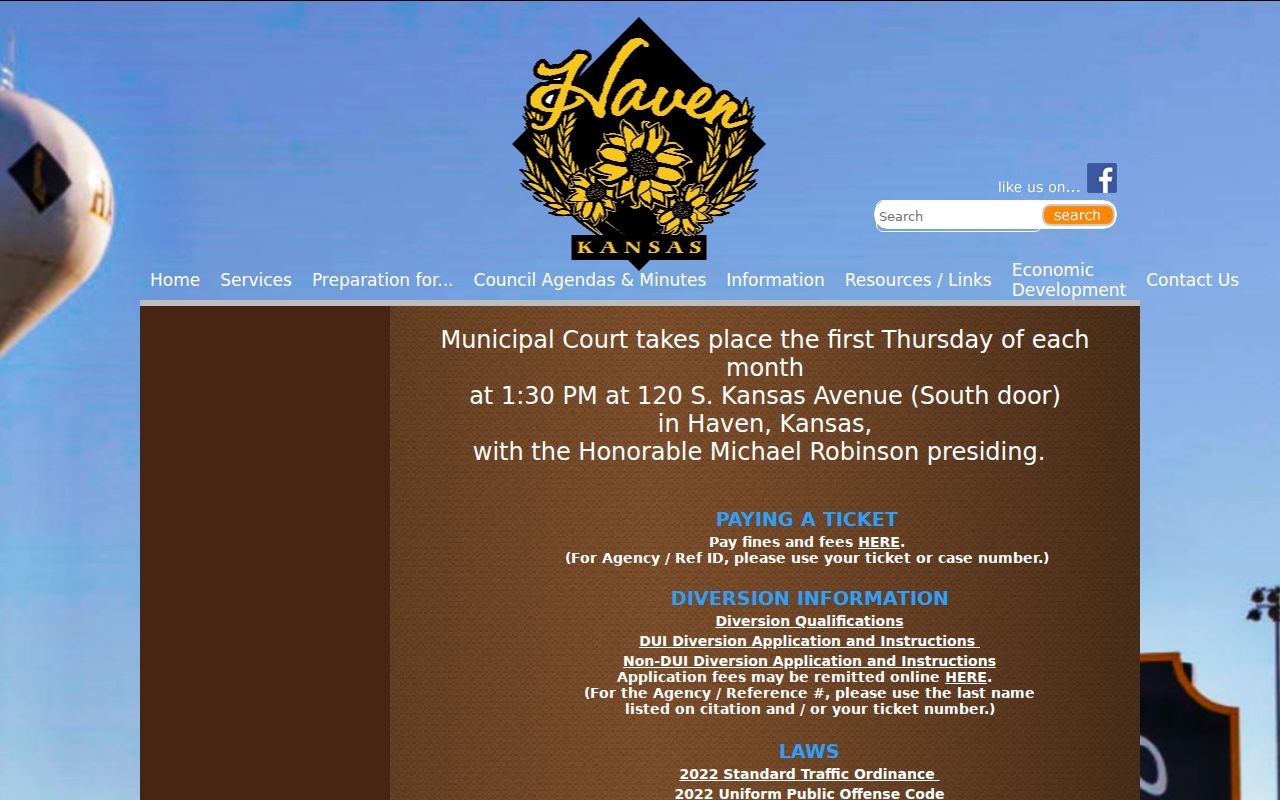
That is why a city-ordinance date belongs with the city court, not the Kansas district portal. The Nickerson City Hall source lists the town's monthly court schedule.
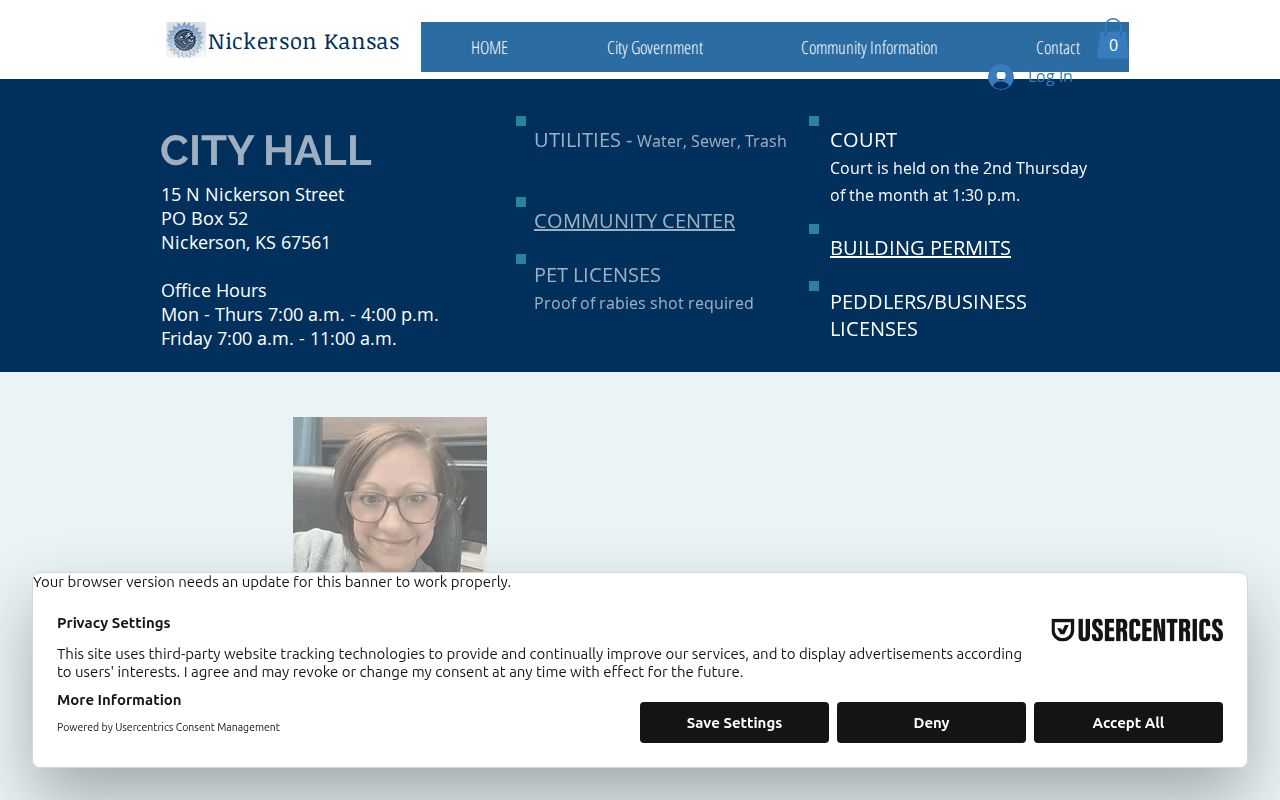
Nickerson keeps its own municipal calendar, separate from the Reno County District Court docket.
Verify Reno Court Attendance Details
Confirm a few things before you attend. Verify the exact time. Check the assigned division, room or remote method, security rules, and any courthouse closure. Division I and II are listed on the third floor of the courthouse. Division III sits in the Law Enforcement Center, and Division IV on the fourth floor. The district magistrate position is on the first floor. A division label therefore beats the word "courthouse" alone. For disability accommodations, the county's ADA notice names Amanda Flores as coordinator. It lists 620-694-2956, TTY 711, fax 620-694-2958, and rn.info@kscourts.org. Ask ahead when possible. Media access, photography, and electronic devices remain subject to the presiding judge. Applicable court rules govern them too.
If You Miss a Court Setting
Act at once. Check the latest case history and notice. Then contact the attorney of record or the clerk for the court that set the matter. District court questions go to the Reno County District Court clerk. Municipal matters go to the city clerk or municipal court. Explain that you missed the date. Then ask what the current docket shows. Never assume that an online absence means the court took no action.
Missed a Setting? A missed court date can lead to court action that is not yet visible in a public calendar.
Contact the proper clerk or your attorney promptly and ask for the current status and next required step.
Seek advice from a licensed Kansas attorney before appearing if the Reno County case may involve a warrant or bond issue.
A clerk can report what the public case record shows. That clerk cannot give legal advice. If a new setting has been entered, write down the date. Include the time, division, location, and hearing type. Then verify those facts against the new notice. A missed setting is not fixed merely by finding a later calendar line.